 Top Faith Senior Care
Common Challenges After Stroke in Elderly Loved Ones in Singapore
Singapore guide: physical, cognitive & emotional challenges after a stroke in elderly loved ones and how families can plan safe, sustainable home recovery.
## Key Takeaways
Stroke in elderly loved ones often leads to multi-layered challenges. Recovery affects mobility, cognition, emotions, and daily independence, requiring structured and consistent support.
Post-stroke recovery happens in phases, not on a fixed timeline. The needs of the elderly evolve from intensive supervision to longer-term routine management, especially in home settings.
Singapore home environments can impact recovery outcomes. HDB layouts, space constraints, and bathroom design may increase the risk of falls without proper adjustments.
Rehabilitation and daily care must work together. Physiotherapy, occupational therapy, and speech therapy are reinforced through consistent routines at home.
Planning reduces risks and caregiver strain. Engaging the right support, such as a [caregiver agency](/care-professionals), helps families manage care sustainably over time.
## Common Challenges After a Stroke
Stroke is the fourth leading cause of death and one of the leading causes of disability in Singaporean adults.
A stroke in elderly seniors can significantly alter daily life, often bringing sudden changes that affect mobility, independence, and emotional well-being. For families, the period after a stroke is frequently marked by uncertainty as care needs evolve across different stages of recovery. Understanding the common challenges elderly stroke survivors face helps families anticipate support requirements and plan care that prioritises safety, dignity, and long-term stability at home.
In Singapore, many families begin this journey after discharge from an acute hospital or Community Hospital. At this stage, discharge planning may involve coordination with the [Agency for Integrated Care (AIC)](https://www.aic.sg/), which connects families to home care services, rehabilitation support, and community resources. Early awareness of what recovery looks like at home makes a meaningful difference in how smoothly this transition unfolds.
## Why Is Recovery Often Challenging?
A stroke occurs when blood flow to part of the brain is disrupted, causing brain cells to be damaged or die from a lack of oxygen. The two main types of stroke are ischaemic stroke, which occurs when a blood vessel supplying the brain becomes blocked, and haemorrhagic stroke, which occurs when a blood vessel ruptures and causes bleeding within the brain.
The effects of a stroke depend heavily on which area of the brain is affected and how quickly treatment is received. Different parts of the brain control different functions, including movement, speech, swallowing, memory, balance, and emotional regulation. When these areas are injured, older adults may experience weakness on one side of the body (hemiparesis), difficulty speaking (aphasia), swallowing problems (dysphagia), impaired coordination, or cognitive changes.
Recovery after a stroke in senior individuals can be particularly challenging because the brain and body generally recover more slowly with age. Many seniors also have underlying medical conditions such as hypertension, diabetes, atrial fibrillation, or cardiovascular disease, which may complicate rehabilitation and increase fatigue during recovery.
Another major challenge is that stroke recovery often involves neuroplasticity, the brain's ability to reorganise and form new neural connections. While the brain can adapt over time, this process requires repeated rehabilitation, consistent routines, and ongoing practice of daily activities. Progress may happen gradually and unevenly, with some functions improving faster than others.
In Singapore, post-stroke recovery commonly involves a multidisciplinary approach, with physiotherapists, occupational therapists, speech therapists, doctors, nurses, and caregivers working together. The recovery journey often extends beyond hospital discharge, requiring long-term support within the home environment to help ageing individuals maintain safety, mobility, and quality of life.
## Stages of Post-Stroke Recovery
Recovery from stroke in elderly patients is not linear. Instead, recovery often progresses through several broad phases, though each individual's recovery journey differs.
In the immediate post-discharge stage, they are often physically weak, easily fatigued, and uncertain in their movements. Basic activities such as transferring from bed to chair or walking short distances may require supervision.
During the early home adjustment stage, families begin establishing routines. While some improvements in mobility may occur, confidence is often low. Risks such as falls, dizziness, and overexertion remain high, especially in households where supervision is not constant.
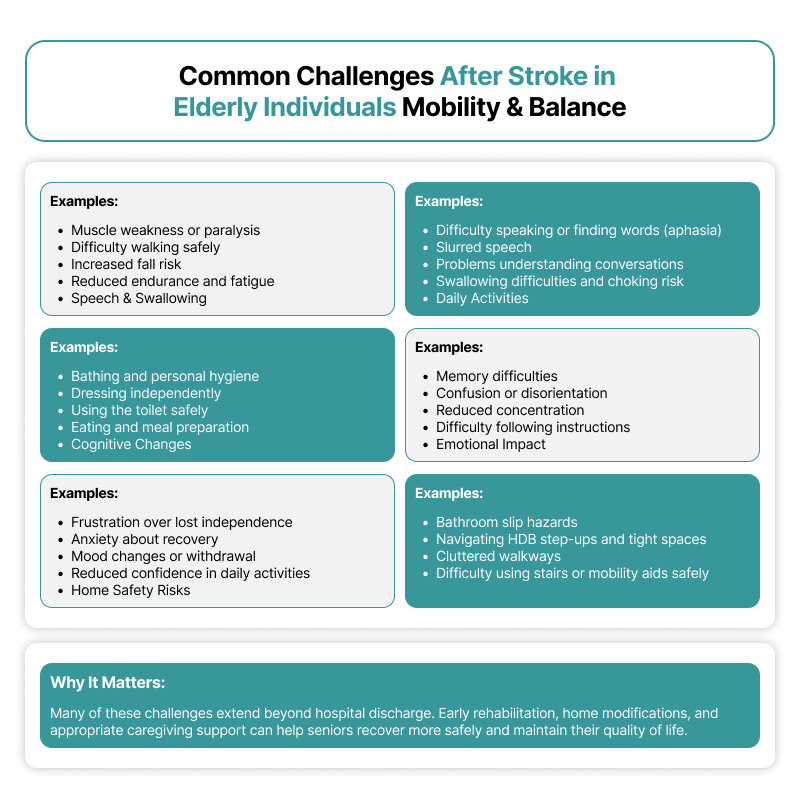
In Singapore homes, particularly HDB flats, these challenges can be amplified. Bathroom step-ups, tight walkways, and limited space for mobility aids can complicate movement. Adjustments such as grab bars, anti-slip mats, and furniture rearrangement often become necessary.
For dual-income households, this stage can be especially demanding. With family members at work, supervision gaps may increase risks, making structured care support an important consideration.
In the longer-term stage, some functions stabilise while others remain impaired. At this point, the focus shifts towards maintaining safety, managing fatigue, and sustaining consistent routines.
Recognising these phases helps families better manage post-stroke challenges in elderly individuals rather than expecting immediate or complete recovery.
## Changes in Mobility and Physical Function
Reduced strength, poor balance, and difficulty coordinating movements are among the most common stroke effects in seniors. Everyday activities such as walking, standing, or using the bathroom can become physically demanding.
These limitations significantly increase the risk of falls, which is a major concern in Singapore's ageing population. Fatigue can also set in quickly, making even simple tasks exhausting.
Physiotherapy is often introduced as part of recovery, helping patients rebuild strength and relearn movement patterns. While therapists guide rehabilitation, consistent support at home ensures that exercises are practised safely and regularly.
Families who engage a [live-in caregiver for the elderly](/care-professionals) often find it easier to maintain these routines, as supervision and assistance are available throughout the day, especially during early recovery when risks are highest.
## Difficulties With Daily Living and Independence
Loss of independence is one of the most emotionally impactful aspects of stroke in elderly loved ones. Activities such as dressing, bathing, eating, and toileting may suddenly require assistance.
This shift can be frustrating for the elderly who were previously independent. The goal of care is not just to complete tasks but to involve them as much as possible while preserving dignity and confidence.
Occupational therapists in Singapore play a key role in helping individuals relearn these daily tasks. They may recommend adaptive tools such as shower chairs or modified utensils. However, these strategies only work when applied consistently. Families often turn to a [full-time caregiver for the elderly in Singapore](/care-professionals) to ensure that these routines are followed daily, especially when balancing work and caregiving responsibilities.
## Cognitive and Communication Challenges
Beyond physical changes, stroke in elderly patients can also affect thinking, memory, and communication. Some may experience confusion, difficulty understanding conversations, or trouble expressing their needs.
These challenges can make daily interactions more complex and may lead to frustration for both the individual and their family members.
Speech therapists help address communication and swallowing issues, which are common stroke effects in seniors. In some cases, dietary modifications may be required to prevent choking risks.
At home, caregivers play a critical role in reinforcing these strategies. Simple adjustments, such as maintaining a consistent routine and using clear, calm communication, can make daily interactions smoother and less stressful.
## Emotional Adjustment and Behavioural Changes
Emotional changes are a significant but often overlooked part of elderly stroke recovery challenges. It is common for individuals to experience anxiety, frustration, or withdrawal as they adapt to new limitations.
These changes are not always immediate. Some may appear weeks or months after the stroke, especially as the reality of long-term adjustments becomes clearer.
Families often find emotional care just as demanding as physical support. Consistency, patience, and reassurance are essential in helping elderly survivors regain a sense of stability.
While some households rely on a Migrant Domestic Worker (MDW) for support, post-stroke care may require more specialised supervision. Engaging a caregiver agency can help families access trained caregivers who are familiar with post-stroke routines and safety considerations.
## Post-Stroke Care Decisions
Caring for an elderly individual after a stroke requires more than short-term adjustments. It involves long-term planning that considers safety, sustainability, and the well-being of both the individual and their family.
In Singapore, several support systems are available. The Agency for Integrated Care (AIC) helps families navigate care options, including home care services, day rehabilitation centres, and caregiver support programmes. Subsidies and schemes may also be available depending on eligibility.
The [Ministry of Manpower (MOM)](https://www.mom.gov.sg/) provides guidelines for hiring and managing Migrant Domestic Workers, including levy structures and rest day requirements. Understanding these regulations is important when planning long-term care arrangements.
Ultimately, the goal is to create a care plan that fits the realities of daily life. This includes considering home layout, family schedules, rehabilitation needs, and the level of supervision required for home care after stroke.
## Frequently Asked Questions
### 1. What are the most common challenges elderly individuals face after a stroke in Singapore?
Common challenges include reduced mobility, balance issues, fatigue, communication difficulties, and emotional changes. Many older people require supervision for daily activities, especially after discharge.
### 2. How does the home environment in Singapore affect recovery?
HDB layouts with narrow corridors, bathroom step-ups, and limited space can increase fall risk. Simple modifications can significantly improve safety.
### 3. What rehabilitation services are involved after a stroke?
Recovery often includes physiotherapy, occupational therapy, and speech therapy. These services may be arranged through hospitals or community providers, with caregivers supporting daily implementation.
### 4. Should families hire a caregiver after a stroke?
This depends on the level of care required. When supervision is needed throughout the day, engaging trained caregiving support can help ensure safety and consistency.
### 5. When should families seek additional support?
If there are repeated falls, worsening confusion, or increasing dependence, it is advisable to consult AIC or healthcare professionals to explore additional care options.
## Conclusion
Adjusting to life after a stroke is a gradual process that requires patience, structure, and the right support system. From mobility limitations to emotional changes, each challenge plays a role in shaping the recovery journey.
By understanding these challenges early, families can move from reactive caregiving to a more structured and sustainable approach. With proper planning, support from healthcare professionals, and consistent routines at home, loved ones can maintain safety, dignity, and a meaningful quality of life.
Top Faith specialises in post-stroke caregiving for Singapore families. [Browse our verified caregivers](/services) experienced in stroke recovery, or [book a free 30-min consultation](/contact) with our care advisor. We'll help you build a recovery plan that fits your home and family routine.
← Back to all articles