 Top Faith Senior Care
Caring for Elderly Parents with Common Chronic Illness in Singapore
Singapore guide for families: how to support ageing parents with common chronic illnesses like diabetes, dementia & arthritis safely and sustainably at home.
## Key Takeaways
- Common chronic illnesses in the elderly, such as diabetes, hypertension, arthritis, and dementia, often progress gradually over time.
- Elderly parents living with chronic illness need a combination of practical support and emotional reassurance.
- HDB layouts, limited space, and bathroom designs can affect safety and mobility, making home adjustments an essential part of care.
- Engaging trained support, such as the Agency for Integrated Care or a professional caregiver agency, helps families sustain care over the long term.
- Understanding long-term illness in seniors allows families to shift from reactive decisions to proactive care arrangements that protect both wellbeing and quality of life.
## Introduction
When an elderly parent lives with a chronic illness, daily life often changes gradually. Over time, families may notice shifts in their loved one's energy levels, mobility, routines, and emotional well-being.
Understanding what to expect helps families prepare for ongoing care needs with clarity. It reduces uncertainty and allows support to evolve as a loved one's condition progresses.
In Singapore, these changes often unfold within compact HDB flats or condominiums, where space constraints, lift access, and bathroom layouts influence daily caregiving. Families also balance care decisions with work commitments, household responsibilities, and choices about whether to engage a Migrant Domestic Worker (MDW), a professional caregiver, or community-based services.
## What Are the Common Chronic Illnesses in the Elderly in Singapore?
Many seniors in Singapore are increasingly affected by multiple long-term conditions, which reinforces the need for structured care support.
Before exploring caregiving strategies, it helps to understand the common chronic illnesses in the elderly that families in Singapore frequently encounter. These conditions tend to be long-term, require ongoing management, and can affect both physical and cognitive function.
Some of the most prevalent include:
- **Diabetes:** Affects blood sugar regulation and may lead to complications such as nerve damage, vision issues, and slower wound healing.
- **Hypertension (high blood pressure):** Often has no obvious symptoms, but it increases the risk of stroke and heart disease.
- **Arthritis:** Causes joint pain, stiffness, and reduced mobility, affecting daily movement.
- **Dementia:** Impacts memory, thinking, and behaviour, requiring increasing supervision over time.
- **Heart disease:** Includes conditions such as coronary artery disease, which affect stamina and physical capacity.
- **Chronic respiratory conditions:** Such as COPD, which can cause breathlessness and fatigue.
These conditions often coexist, meaning a loved one may manage several health concerns at once. This complexity shapes how care is structured at home.
## How Common Chronic Illnesses in the Elderly Affect Daily Life Over Time
Chronic illnesses often introduce fluctuating limitations. Some days may feel manageable, while others require more hands-on support. Fatigue, discomfort, or reduced stamina can affect an elderly parent's ability to carry out routine activities.
These changes make consistency and adaptability important, especially when care is provided at home.
As conditions progress, families may consult the [Agency for Integrated Care](https://www.aic.sg/) to explore home care services, day care programmes, or longer-term options supported under Ministry of Health frameworks. These assessments typically focus on functional ability rather than diagnosis alone.
### Increasing Dependence in Everyday Activities
As chronic illness progresses, older adults may need assistance with daily tasks such as personal hygiene, meal preparation, or moving safely around the home. This growing dependence can be difficult for both the elderly individual and their family to accept.
Support that is responsive and respectful helps maintain dignity while ensuring essential needs are met.
In many HDB homes, environmental factors can accelerate functional challenges. Bathroom step-ups, limited space for mobility aids, and narrow corridors may increase the risk of falls for parents who are experiencing fatigue or balance issues.
Small modifications, such as grab bars, anti-slip flooring, or rearranging furniture, often become necessary as dependence increases.
### Emotional and Psychological Impact on Elderly Parents
Living with a long-term condition can be emotionally challenging. Elderly individuals may experience frustration, anxiety, or a sense of loss as their independence changes.
Emotional reassurance, patience, and stable routines play an important role in maintaining wellbeing.
Families often focus on physical care but underestimate how much emotional support matters. Simple actions, such as maintaining familiar routines, encouraging participation in daily activities, and creating opportunities for social interaction, can significantly improve morale.
## Balancing Caregiving Demands with the Right Support Options
For families, supporting an elderly parent with chronic illness can become physically and emotionally demanding over time.
Balancing work, personal responsibilities, and caregiving often leads to fatigue or stress. Having structured support in place helps families sustain care without becoming overwhelmed.
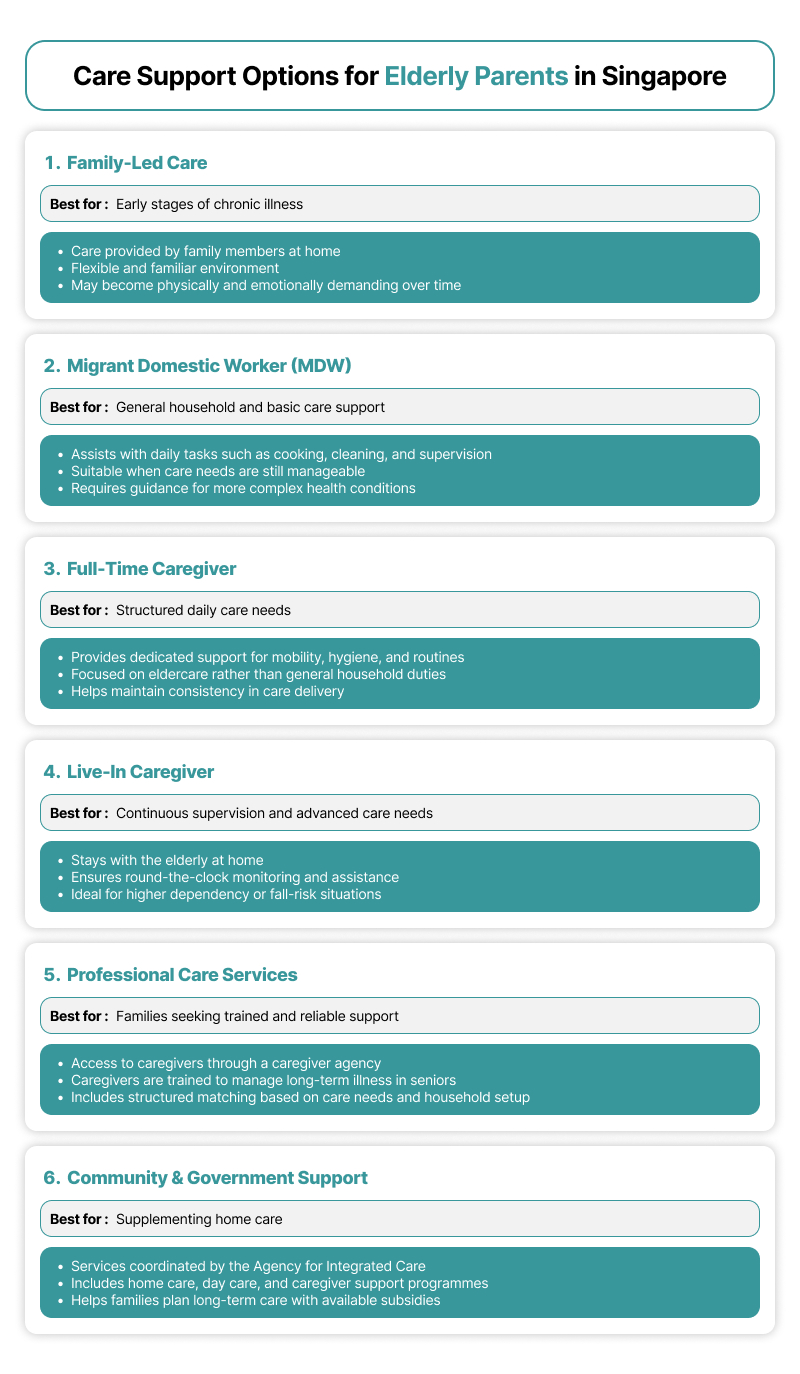
Some households rely on an MDW to assist with caregiving. While this may work in the earlier stages, more advanced conditions often require specialised attention. In such cases:
- Engaging a [full-time caregiver for the elderly in Singapore](/care-professionals) provides dedicated, structured support.
- Exploring a live-in caregiver for the elderly ensures continuous supervision and more consistent care at home.
- Partnering with a dedicated caregiver agency allows families to access trained caregivers who understand how to manage long-term illness in seniors safely and effectively.
## Planning Long-Term Support With Confidence
Some families can manage chronic illness care independently in the early stages. However, as care needs increase or routines become more demanding, additional support often becomes necessary to maintain safety, consistency, and quality of life.
In Singapore, families often move gradually from informal family support to structured home-based caregiving as chronic illness progresses. Seeking guidance early helps avoid crisis-driven decisions, such as emergency hospital admissions or a rushed institutional placement.
Understanding how living with chronic illness in the elderly evolves allows families to make informed, timely decisions that support both immediate needs and long-term well-being.
## Government Support Schemes Families Should Know About
Beyond arranging daily care, it is important to understand the government support pathways available locally.
The [Agency for Integrated Care](https://www.aic.sg/) helps families navigate Singapore's eldercare system by providing guidance on home care services, caregiver training, community support options, and subsidy applications. Families can also approach AIC for care assessments and recommendations based on the elderly individual's needs.
The [Ministry of Health](https://www.moh.gov.sg/) also oversees several national support schemes that families commonly rely on when managing long-term caregiving responsibilities. These include:
- **CHAS (Community Health Assist Scheme):** Provides subsidised outpatient care for chronic conditions such as diabetes, hypertension, and arthritis.
- **Home Caregiving Grant (HCG):** Provides eligible families with monthly financial support for loved ones with permanent moderate disability.
- **Pioneer Generation and Merdeka Generation benefits:** Offer additional healthcare subsidies for older Singaporeans.
- **CareShield Life and ElderShield:** Provide long-term care insurance payouts for severe disability.
- **Seniors' Mobility and Enabling Fund (SMF):** Subsidises mobility aids, assistive devices, and selected home healthcare equipment.
Depending on the elderly individual's condition and level of independence, families may also qualify for MediSave-supported treatments, home nursing subsidies, rehabilitation support, or community care services.
Understanding these support schemes early can help families make more sustainable caregiving decisions, reduce long-term financial strain, and plan appropriate care arrangements before needs become urgent or overwhelming.
## Frequently Asked Questions
### When should I consider additional caregiving support?
You may need additional support when your elderly parent starts requiring help with daily activities such as bathing, mobility, medication management, or supervision. Increasing fatigue, safety risks, or caregiver burnout are also signs that structured support may be necessary.
### What is the difference between a full-time caregiver and a live-in caregiver?
A full-time caregiver for the elderly in Singapore typically provides structured care during set hours, while a live-in caregiver for the elderly stays in the home to offer continuous, round-the-clock supervision and assistance.
### Can an MDW handle caregiving needs?
An MDW can support basic care and household tasks in the early stages. However, more complex conditions often require trained caregivers who are experienced in managing long-term illness in seniors.
### What support is available in Singapore for elderly care?
Families can explore services through the Agency for Integrated Care, including home care, day care programmes, and caregiver support schemes. These services help complement home-based caregiving.
### How do I choose the right caregiver for my parents?
The right caregiver depends on your parent's condition, level of independence, and home environment. Working with a trusted caregiver agency can help match you with trained professionals suited to your family's needs.
## Supporting Care With the Right Structure at Top Faith Senior Care
Caring for elderly parents with any of the common chronic illnesses is an ongoing journey that evolves over time.
With the right understanding, preparation, and support, families can create a care environment that balances safety, dignity, and quality of life.
At every stage, access to structured support makes a meaningful difference. Whether you are exploring options through a trusted caregiver agency or considering a dedicated caregiver arrangement, early planning helps ensure care remains consistent and manageable.
At Top Faith Senior Care, we use AI-smart matching to align caregivers with family needs based on 25 key factors, ensuring support suits both the elderly parent's condition and the household environment. Our assessments take into account HDB living conditions, household work schedules, existing MDW arrangements, and local regulatory considerations, so care recommendations are practical within Singapore's living environment.
[Book an appointment](/contact) for a free 30-minute consultation today. Alternatively, [contact us](/contact) to learn how our structured matching process and trained caregiver support can help your family manage long-term chronic illness care at home with clarity and peace of mind.
← Back to all articles